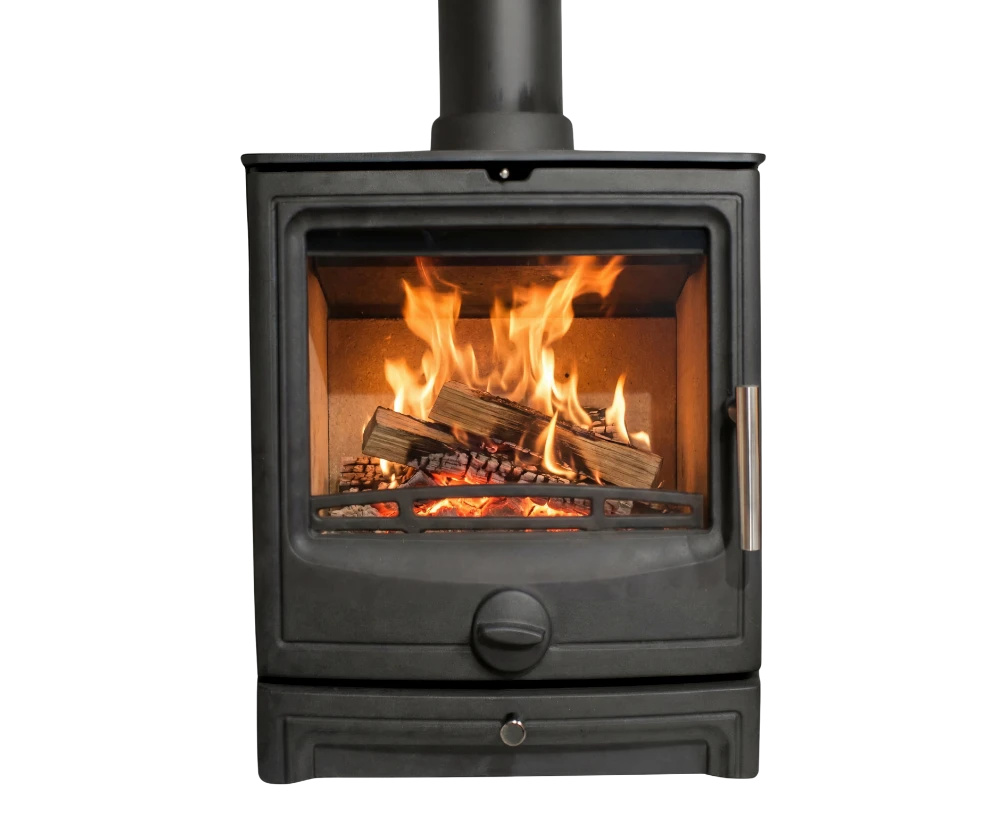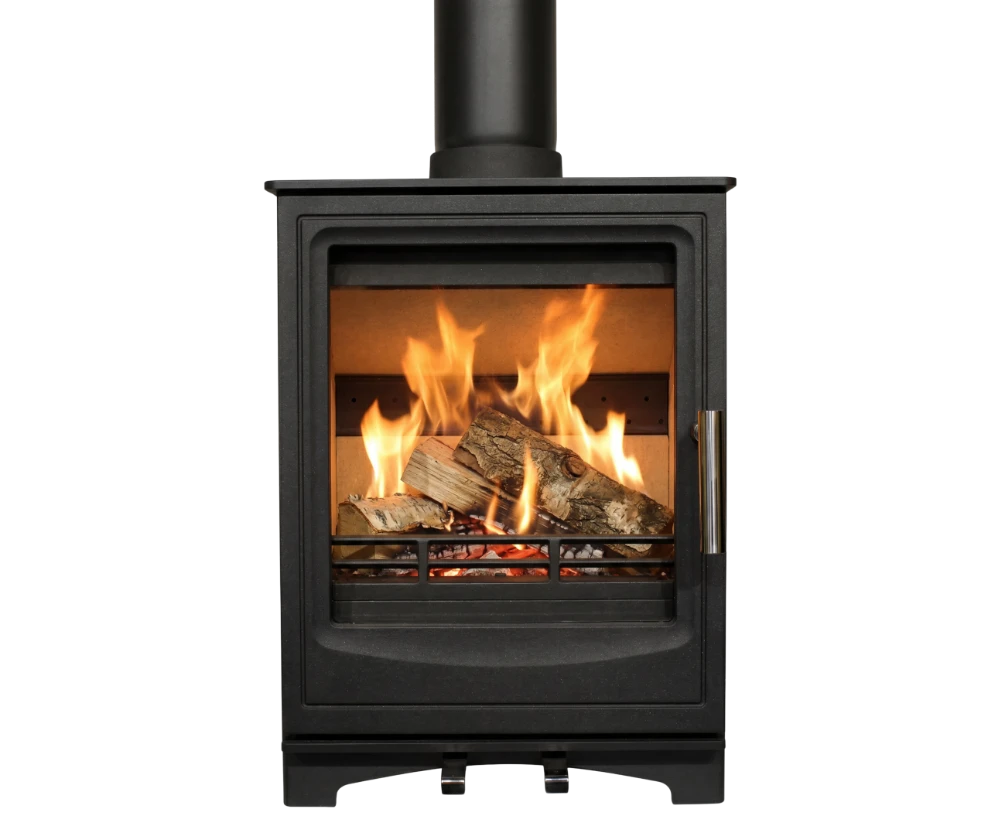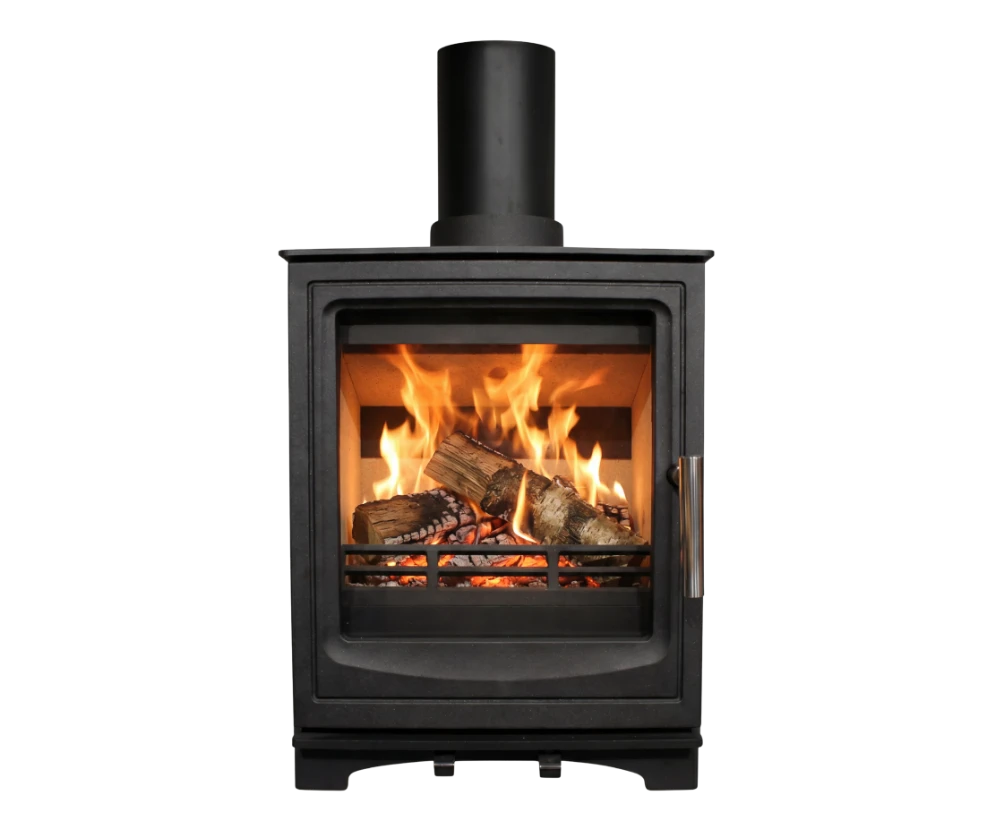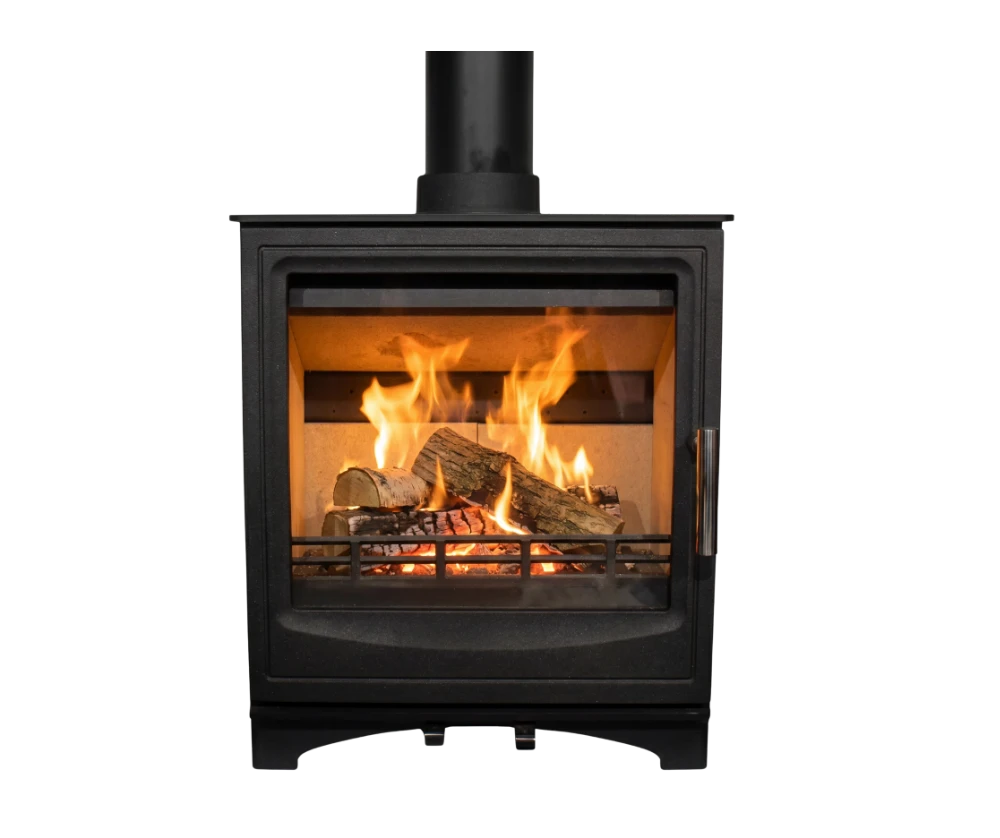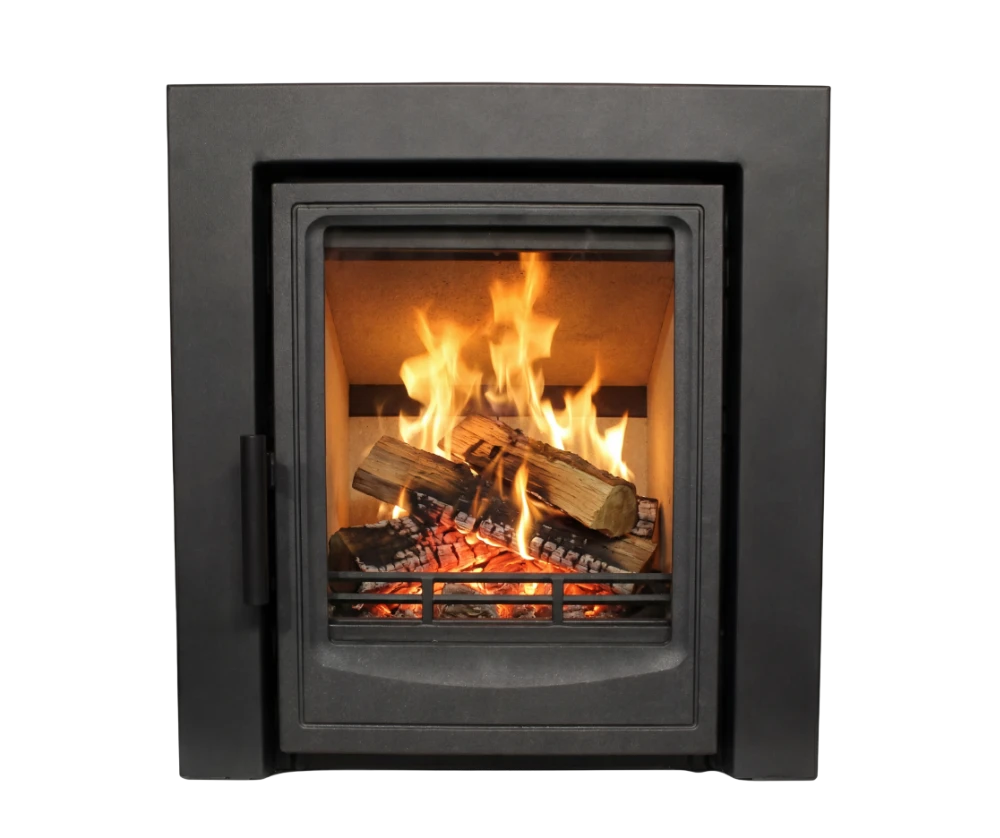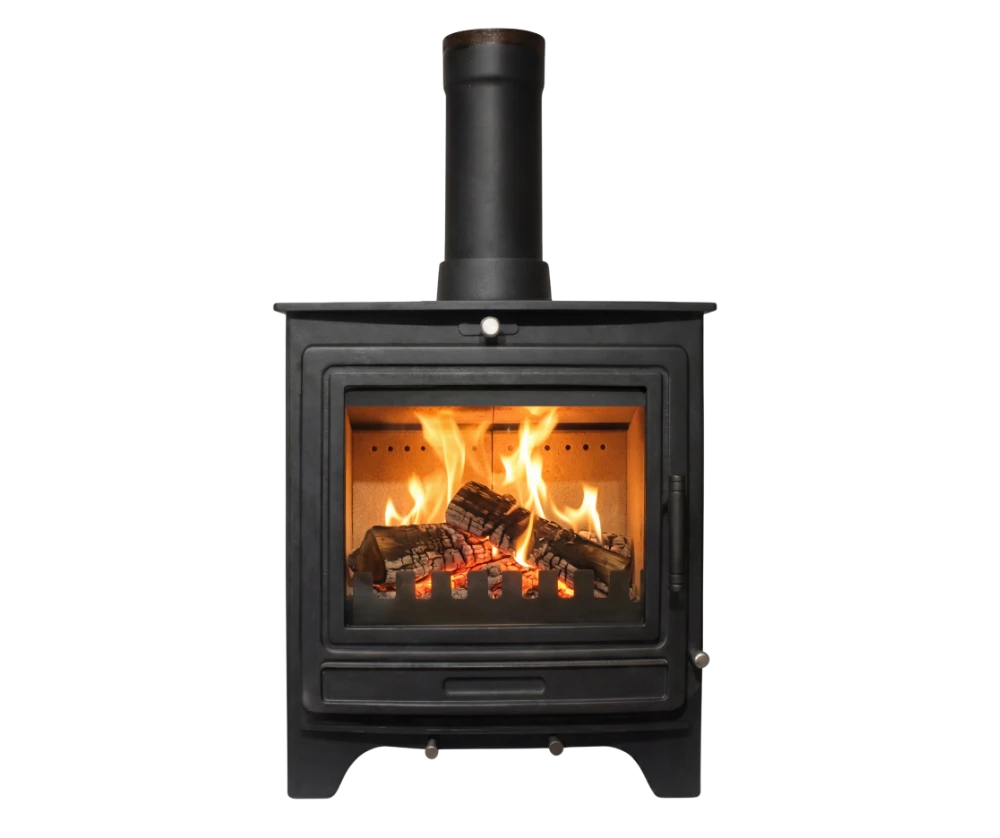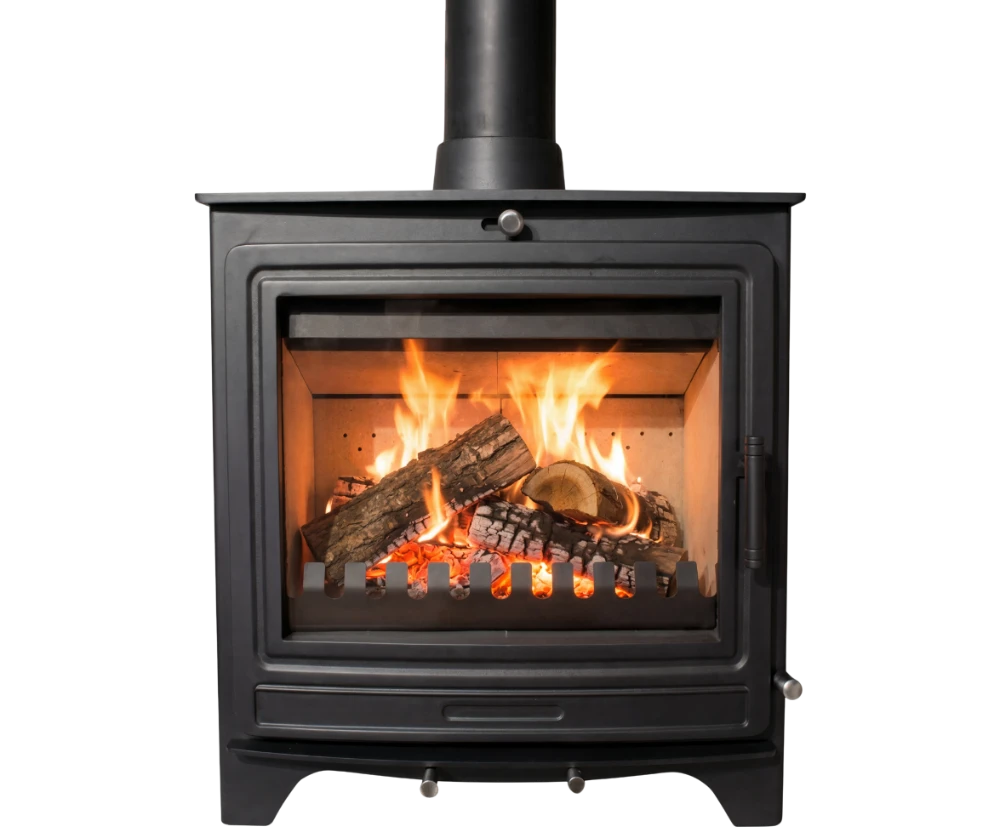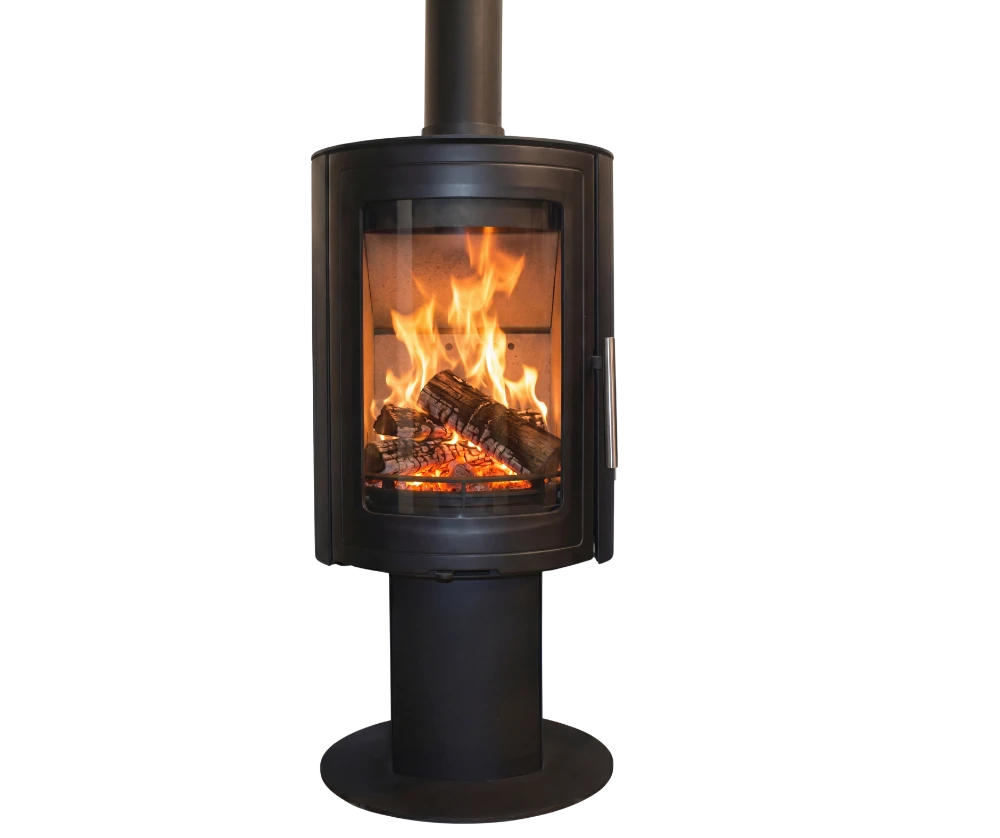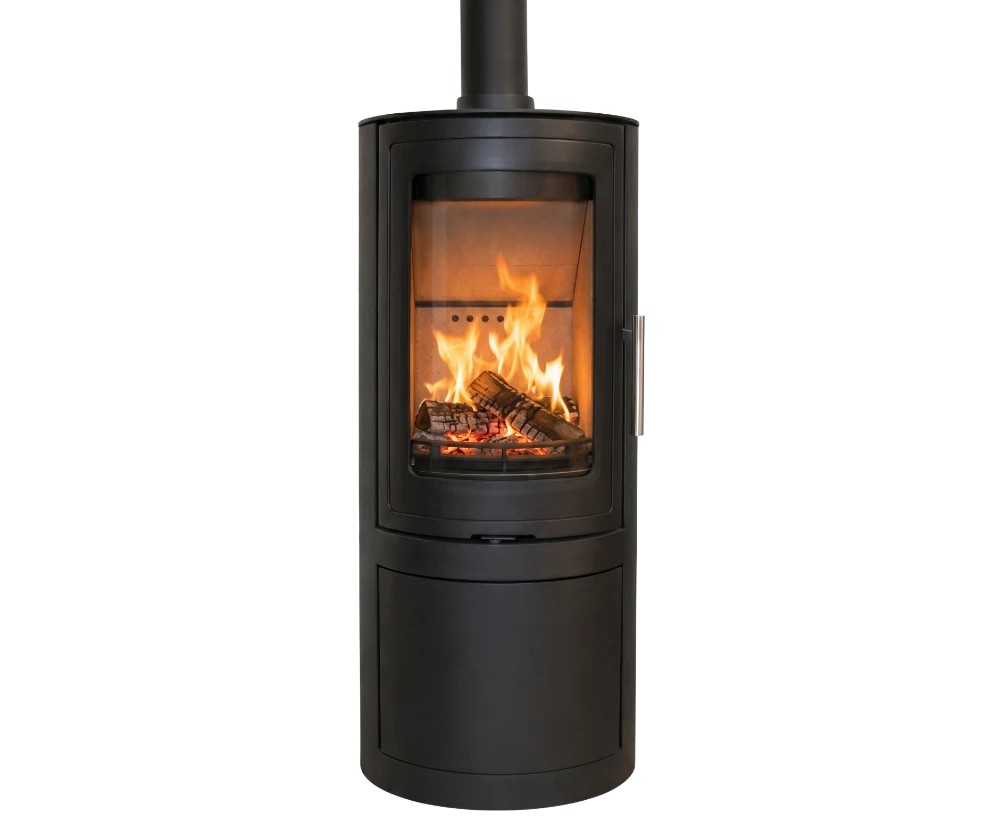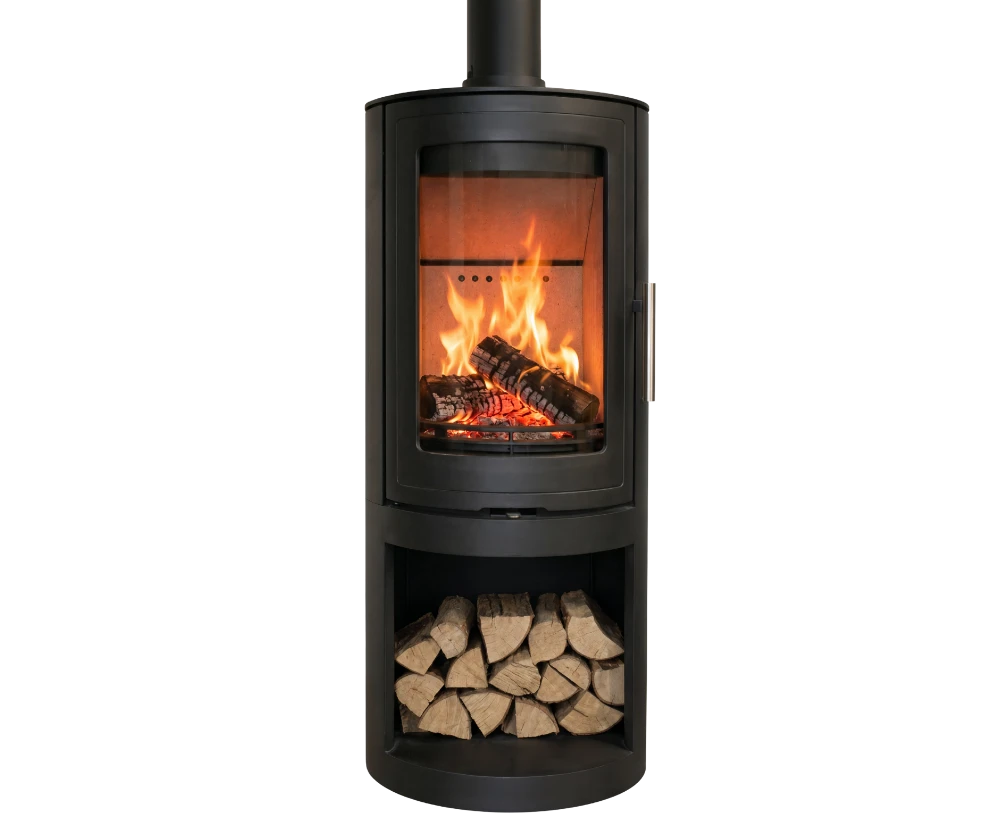
Find answers to common questions about wood burning and multi-fuel stoves.
Choosing the correct stove size is essential for both comfort and efficiency. A stove that’s too large can overheat the space, while one that’s too small may struggle to keep it warm.
A qualified installer will calculate the required heat output (measured in kilowatts, or kW) using guidelines from Approved Document J of the Building Regulations. This calculation takes into account factors such as room size, insulation levels, ceiling height, and window area to ensure the stove is perfectly suited to your space.
Ventilation is crucial for safe and efficient stove operation, as your appliance needs a steady supply of oxygen to burn fuel properly.
Homes built before 2008: Stoves with an output of 5kW or less typically do not require a dedicated air vent, unless the appliance struggles to draw sufficient air. For stoves above 5kW, a permanent air vent is required, with the size determined by the stove’s output.
Homes built after 2008: Modern properties are more airtight, so all stoves require a permanent air vent, regardless of output. The vent size will be calculated based on the stove’s kW rating.
A flue is the system that safely carries smoke and combustion gases from your stove out of your home. It’s a critical part of any fireplace installation.
There are several types of flue systems:
Class 1 Chimney: A traditional brick chimney built into the structure of the house.
Twin Wall Insulated Flue System: A stainless steel system with inner and outer walls separated by insulation. This is used when there is no existing chimney.
Flexible Flue Liner (316 or 904 grade): Installed inside an existing chimney to improve safety and performance.
If an existing chimney is damaged or is leaking fumes, a liner is essential. Even when a chimney is structurally sound, adding a liner is strongly recommended, as modern stoves are designed to perform best with lined systems. Without a liner, the larger internal space of a chimney can reduce efficiency and affect draw.
A professional chimney installer or chimney sweep can assess your chimney using a smoke test and, if needed, a CCTV inspection.
These checks will identify any leaks, blockages, or structural issues and determine whether a flue liner or other remedial work is required before installation.
Regular maintenance is essential to keep your flue working safely and efficiently.
Using the correct fuel also plays a big role. Only burn Ready to Burn approved fuels or properly seasoned logs with a moisture content of around 12–15%. This helps prevent soot build-up, improves efficiency, and extends the life of your flue.
Your fireplace and stove should be serviced regularly to ensure safe operation.
Routine servicing helps maintain efficiency, prolong the lifespan of your stove, and identify potential issues early.
For the best performance and to comply with regulations, you should use:
Avoid burning wet or unseasoned wood, as this produces excess smoke, reduces efficiency, and can cause dangerous build-up inside the flue. Always check your stoves operation and instruction guide, as this will share suitable fuel types for your stove type.
Firewood should be stored in a well-ventilated log store that allows air to circulate freely around the logs.
For best results:
Proper storage helps maintain low moisture content, ensuring cleaner burning and better heat output.
Yes. A carbon monoxide (CO) alarm is a legal requirement for all solid fuel installations.
It should be:
A CO alarm provides essential protection by alerting you to dangerous levels of carbon monoxide, a colourless and odourless gas.
Installation times can vary depending on the type of stove, the complexity of the job, and the property itself.
Your installer will be able to provide a more accurate timeframe after assessing your home and requirements.
In most cases, you do not need planning permission to install a stove or fireplace. However, there are some important exceptions:
Regardless of planning permission, all installations must comply with UK Building Regulations (Approved Document J).
If you use a qualified installer registered with a recognised governing body (such as HETAS), they can self-certify the installation. This means:
If you do not use a registered installer, you will need to arrange approval directly through your local Building Control department.
Yes, you can still install a stove even if your home doesn’t have an existing chimney.
In these cases, a twin-wall insulated flue system is used. This is a purpose-built stainless steel chimney system that safely carries smoke and gases from the stove to the outside of your property. It can be installed either internally (through floors and roof) or externally along an outside wall.
While most homes can accommodate this type of system, there are occasional situations where installation may not be possible.
This could be due to:
A qualified installer will assess your home and advise on the best and safest installation options available.
The safest approach is to have your appliance inspected by a qualified, registered installer. If you have any concerns, such as unusual smells, smoke issues, or poor performance, do not use the appliance until it has been checked.
Regular servicing, proper fuel use, and ensuring your chimney and flue are in good condition all play a key role in maintaining a safe fireplace.
The amount of wood you should use depends on the size and design of your stove, but as a general guide:
For best results, aim for a consistent, moderate fire rather than filling the firebox completely. Your stove’s manufacturer guidelines will provide the most accurate recommendations for your specific model.
To maintain safe and efficient operation, avoid adding too much fuel at once.
Following a gradual refuelling approach will give you better heat control and cleaner combustion.
For the best heat output and efficiency, choose hardwoods, which burn longer and more consistently. Popular options include:
These woods provide a steady, high-quality burn when properly seasoned or kiln-dried.
A common cause of smoke is a cold flue, which prevents proper draw. To minimise this:
Pre-warm the flue:
Leave the stove door slightly open for a few minutes before lighting to encourage warm air to rise up the chimney.
Use the “top-down” (upside-down) method:
This method allows the fire to burn downward, quickly warming the flue and producing less smoke and more efficient combustion.
This is usually caused by a cold flue or “cold air pocket” in the chimney, which prevents smoke from rising properly.
As the flue warms up, the draw improves and the smoke should clear. Pre-warming the flue and using dry fuel can help prevent this issue.
Clean glass is a sign of efficient burning.
To help keep it clear:
If soot builds up regularly, it may indicate poor fuel quality or insufficient airflow.
Stoves are designed with built-in air controls that regulate how much oxygen enters the fire.
Adjusting the primary and secondary air controls allows you to fine-tune heat output and fuel consumption. Your installer or manual will show the best settings for your specific stove.
No, you should not leave your stove burning unattended or overnight.
For safety reasons, always ensure the fire is under control and monitored while in use.
The safest way to extinguish a fire is to let it burn out naturally.
This ensures a safe and controlled cooling process.
No – stoves are designed to operate as closed appliances.
Leaving the door open can:
Always keep the door closed during normal operation.
If you notice smoke inside your home:
1. Open windows and ventilate the area immediately
2. Allow the fire to die down if safe to do so
3. Check for simple causes such as a cold flue or poor airflow
If the issue persists or is severe:
If you suspect danger or feel unwell, always prioritise safety and seek emergency assistance.
How often you empty the ash pan depends on how frequently you use your stove.
Ash should always be handled with care, as it can retain heat and hidden embers long after the fire has gone out.
Follow these steps for safe disposal:
1. Allow ash to cool completely: Wait at least 24–48 hours after your last fire. Even if it appears cold, hot embers can remain hidden.
2. Transfer to a metal container: Use a metal shovel and place the ash into a metal container with a tight-fitting lid. Never use plastic, cardboard, or paper containers.
3. Store safely outdoors: Keep the container on a non-combustible surface such as concrete, stone, or bare soil. Store it well away from buildings, fences, or flammable materials.
4. Final disposal options, once you are certain the ash is completely cold:
Your chimney should be swept at least twice a year, particularly if your stove is used regularly.
More frequent sweeping may be required depending on usage and fuel type. Regular sweeping helps prevent soot and creosote build-up, reducing the risk of chimney fires and ensuring efficient operation.
Firewood should have a moisture content of 12–15% for optimal performance.
Burning wood that is too wet leads to:
Using a moisture meter is a simple way to ensure your logs are ready to burn.
Common causes include:
Ensuring correct fuel, proper airflow, and a well-maintained flue system will usually resolve most performance issues.
No – treated, painted, or chemically processed wood should never be burned.
Burning these materials can release harmful fumes, damage your stove and flue system, and may invalidate your warranty.
Poor airflow can affect both performance and ease of lighting.
Check your stove settings:
Check your fuel:
Check for blockages or restrictions, common issues include:
If problems persist, a professional chimney sweep or installer should inspect the system to identify and resolve the issue.
Please Note: This FAQ and guide are provided for general information and reference only. Always read and follow the manufacturer’s installation, operation, and maintenance instructions for your specific stove or fireplace. If in doubt, consult a qualified professional.
Explore the Ecoflame Range
Not sure which Ecoflame stove is the best suited for your room or installation? Get in touch and we’ll help you to find your local retail partner.